My Take
Crossdressing romance is the quiet one. The one that sneaks up on you. While the other subgenres are busy with cages and programmes and training arcs, crossdressing romance puts a man in a dress and asks: what if someone loved him in it?
That’s a different question from what you might think. It’s not about the clothes — except it is, because the clothes are the vulnerability made visible. A man standing in his girlfriend’s bathroom in sheer hold-ups and a satin slip he ordered from Bravissimo under a fake name, his heart hammering so loudly he’s certain she can hear it through the door. That man is showing you the most private part of himself, and a woman who opens that door and reaches for him instead of recoiling is a woman who has just done something braver than either of them realises.
I write a lot of kink. I write about cages and denial and women who take men apart with the precision of a Swiss watchmaker. But crossdressing romance is the subgenre that makes me cry at my desk, because the engine isn’t power. It’s tenderness. And tenderness, in this genre, is erotic. The woman who sees him in stockings and her face softens and she touches his leg where the nylon meets skin and says you look lovely and means it — that woman is doing something to the reader that all the cages in the world can’t match.
How the Romance Works
The crossdressing is the secret. The romance is about what happens when the secret is shared.
He’s been doing this alone. For years, probably. In hotel rooms on business trips, stepping into cheap knickers from a multipack he bought at a self-service checkout with his face burning. In the bathroom after she’s gone to bed, pulling on a pair of tights he keeps in a shoebox at the back of the wardrobe behind the Christmas decorations. In the twenty-minute window between her leaving for work and him leaving for work, when he stands in front of the mirror in her hold-ups and a blouse he found in a charity shop and feels, for twenty minutes, like the person he actually is. The silk against his chest. The tights hugging his legs. His reflection showing someone softer, someone real. And then he takes it all off and drives to work and the day is long and grey and the person in the mirror recedes to a place he can’t reach until the next twenty-minute window.
The romance begins when she finds out. The discovery scene is everything. The drawer left open — the one with the satin knickers and the padded bra he’s been hiding under old jumpers. The browser history not cleared — that tab showing a size 12 pencil skirt on ASOS. The Amazon package addressed to him that contains a pair of patent block heels and a matching clutch bag. Or the devastating version: she comes home early and he’s in the hallway in a fitted skirt and a silk blouse and the heels he’s been practising in when she’s out, and the look on his face is the look of someone whose life has just ended.
Except it hasn’t. Because the best crossdressing romance is built on the moment after the discovery. When she doesn’t leave. When she sits on the edge of the bed and looks at him — looks at the blouse tucked into the skirt, the heels he’s clearly been walking in for a while because he’s steadier than a beginner should be, the faint trace of mascara he’s applied with surprising competence — and the world is very quiet and she says something like how long? Not angry. Just asking. And his answer, whatever it is, breaks them both open.
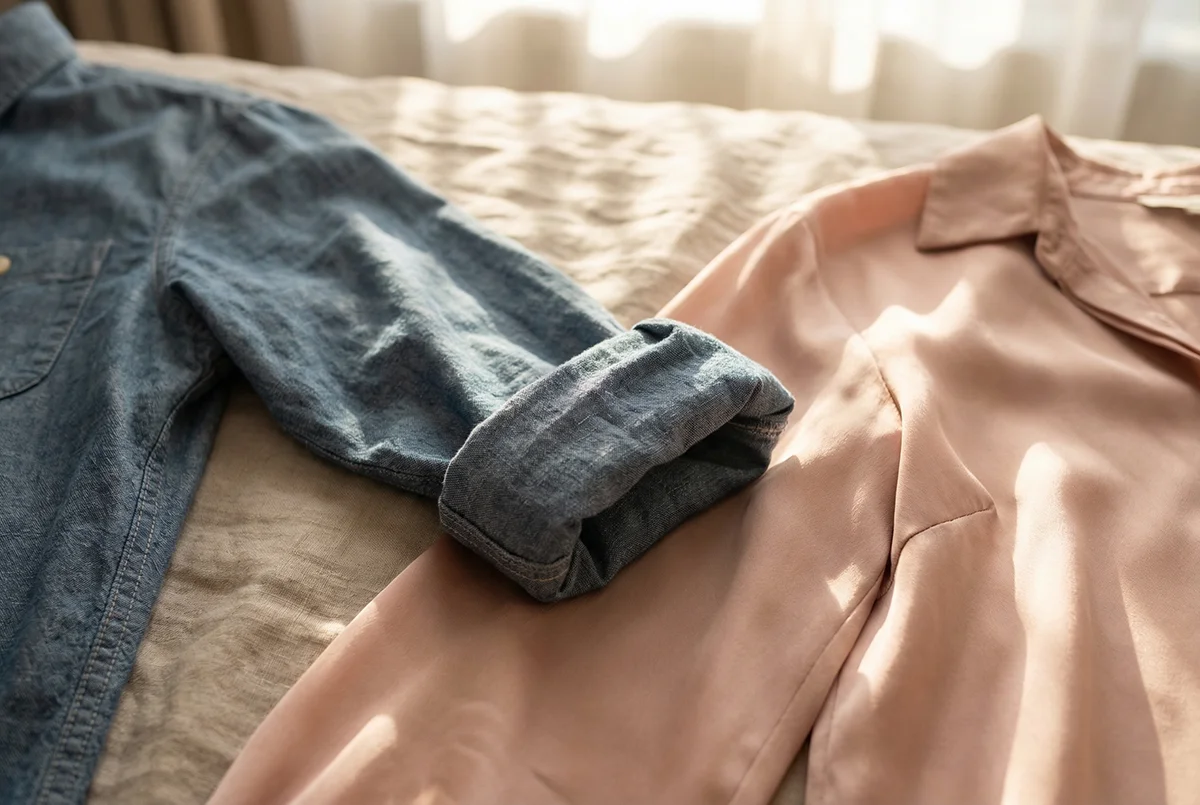
The romance builds from there, and the building is erotic in a way that surprises readers who came for something else. She buys him things. Not fetish wear. Real clothes. A cashmere cardigan she saw in Zara that she thinks would suit his colouring. Hold-ups from M&S because the cheap ones ladder after one wear. A proper bra from Bravissimo — measured, fitted, underwired — because the ones he’s been buying online are wrong in every dimension and his shoulders are raw from the straps. Silicone breast forms that sit in the cups and give him a shape that makes the blouses hang properly. She’s practical about it, and her practicality is the sexiest thing in the book, because it means she’s accepted this and integrated it into the life they share.
Saturday morning becomes their ritual. Her hand on the small of his back as they browse the lingerie section together, him flushed and terrified and aroused while she holds up a satin nightdress and tilts her head and says this would look gorgeous on you, actually. And it would. And they both know it. And the knowledge sits between them like a pulse.
And then the intimacy shifts. Because he’s wearing the things she chose — the knickers she picked, the bra she fitted, the silk slip she bought because she wanted to see him in it — and she’s looking at him in the things she chose, and she’s aroused. He can see it. And that realisation — that his crossdressing turns her on, not out of kink but out of intimacy, because this is the real him and the real him is beautiful to her — is the moment the reader’s chest cracks open. She touches him through the slip. The silk moves against his skin. His body arches into her hand. And the tenderness and the desire are the same thing.
The Fear
Crossdressing romance runs on fear, and the fear is social. Not the bedroom. The world. What if someone sees the hold-ups under his trousers. What if Dave from work notices the smooth legs. What if the neighbours see the ASOS delivery. What if his mother visits and opens the wrong drawer and finds the satin knickers and the padded bra and the breast forms in their velvet pouch.
The best books in this genre make that pressure specific and British. The WhatsApp group where Dave posts something casually transphobic and he has to laugh along while wearing knickers under his jeans. The work dinner where she nearly calls him by the wrong name. The Asos delivery that arrives while his sister is visiting and he has to pretend it’s for his girlfriend and his girlfriend has to pretend she ordered a size 12 pencil skirt for herself. The fear is mundane and persistent and it makes every private moment between them feel like a small act of defiance against a world that would not understand.
And the intimacy deepens because of the fear. Because they are the only two people who know, and that shared secret creates a closeness unlike anything else. When they’re alone and he’s dressed — in a silk nightdress, or a fitted skirt and blouse, or just knickers and a bra and nothing else because sometimes the simplest outfit is the most devastating — and she’s looking at him, and the curtains are closed, and the world is locked out, what happens between them has the intensity of people who have chosen each other against the odds.
What Ruins It
Making it a fetish story with a romance label. If the crossdressing is purely sexual — if he only dresses to get off, if she only participates because it turns her on — you’ve written erotica, not romance. The crossdressing has to matter outside the bedroom. He has to be a fuller, realer, more complete person in the dress. She has to see that. The reader has to feel the difference between the man who goes to work in his suit and the person who comes home and changes into a soft jumper and a skirt and bare feet and breathes out for the first time all day.
The other killer is resolving the fear too quickly. If the world accepts him by chapter six, you’ve written a greeting card, not a romance. The tension between the private self and the public world should run through the entire book, and the wardrobe should grow with the relationship: from hidden knickers to shared shopping trips to the moment he wears something of hers to the supermarket and his heart nearly stops and nothing happens and that nothing is the most enormous something of his life.
Reader Appeal
You’re here because you want the love story. Not the training arc, not the power exchange, not the institutional programme. The love story. The one where someone sees the real you — the you in silk, the you in hold-ups, the you who cries with relief when she says you’re beautiful and means it — and stays.
Crossdressing romance is feminisation fiction’s tender underbelly. It’s the subgenre where the vulnerability is the foreplay and the acceptance is the climax and the ordinary life you build together afterwards — the Saturday morning lingerie shopping, the shared wardrobe, the quiet evenings where you’re both in silk nightwear on the sofa and the normality of it is the most radical thing either of you has ever done — is the happily ever after.
I believe in the woman who stays. I write her every chance I get. Stay with me.